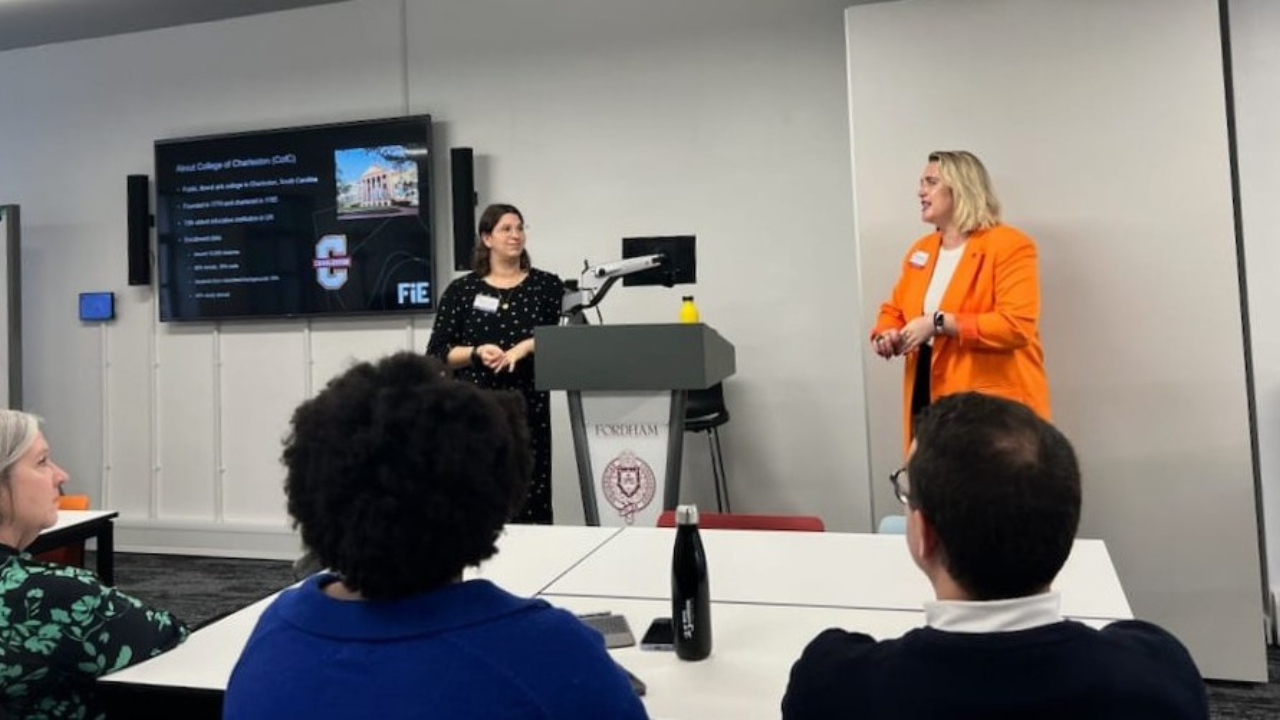
FIE is delighted to share that our colleagues led two sessions at the inaugural conference of the Association of American Study Abroad Programmes (AASAP). This landmark event brought together professionals and educators dedicated to advancing the quality, inclusivity, and innovation of study abroad experiences in the UK and beyond.
Our team contributed to this important dialogue through two distinct yet complementary presentations - each exploring how Study Abroad can empower students and enhance their academic success.
Supporting First-Year Success: A Case Study of the iCharleston Programme at FIE
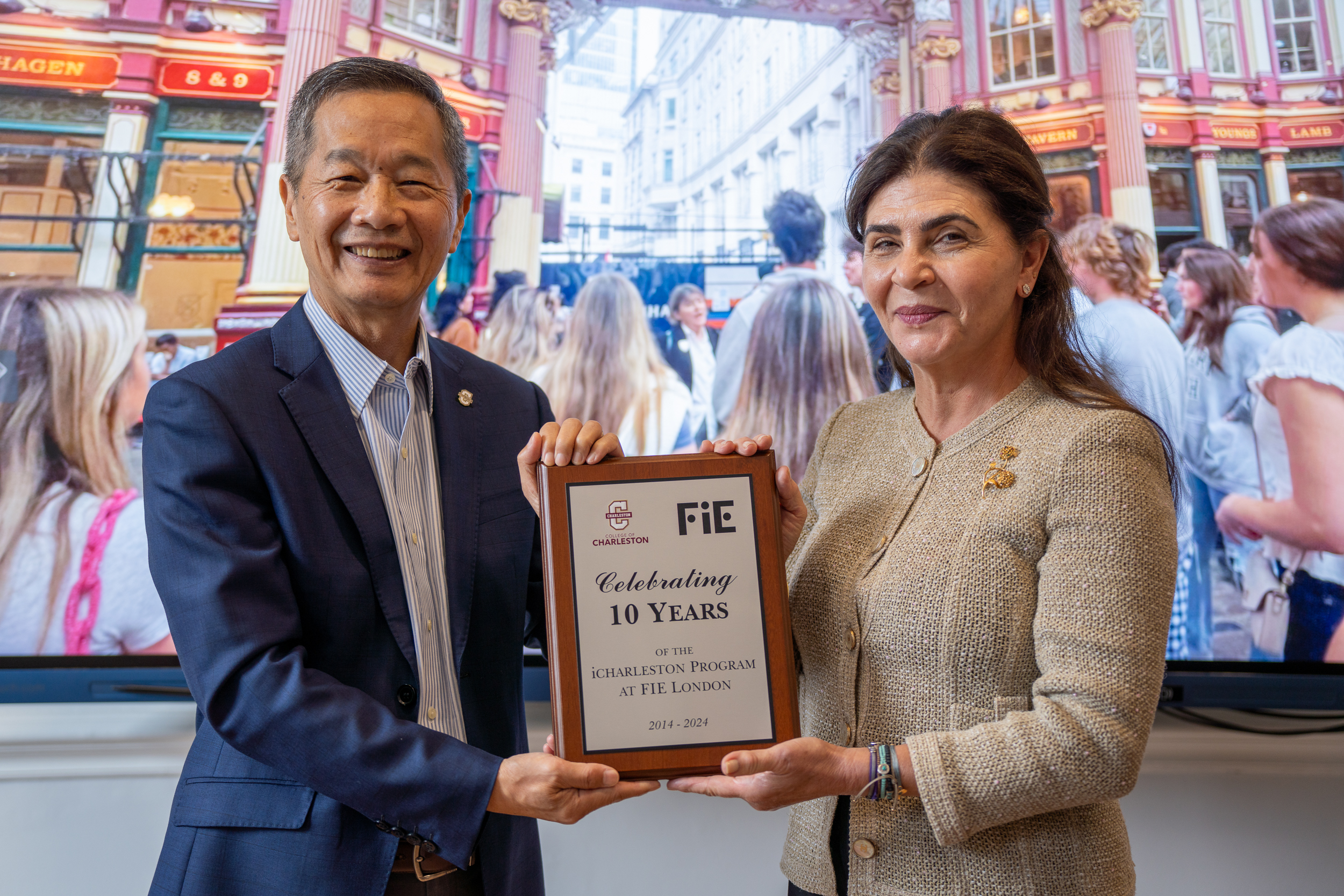
Dr Rebecca Pollack and Stephanie Brown showcased the iCharleston first-year study abroad programme, which recently celebrated its 10-year partnership between the College of Charleston (CofC) and FIE. This case study offered timely insights into how a holistic approach to first-year academic support fosters student success, both abroad and on return to campus.
Through an integrated model of ‘360-degree support’, iCharleston students benefit from guidance and mentorship from four key groups:
1. FIE Faculty
2. The FIE Academic Faculty Director
3. CofC iCharleston Site Directors
4. FIE Mentors
Working collaboratively, these teams ensure that every student receives personalised and proactive academic support. By identifying and addressing academic challenges early, staff at both FIE and CofC can tailor interventions that help students build sustainable study skills and confidence. This partnership-driven model exemplifies how a supportive and structured environment abroad can prepare students for continued success upon their transition to campus life in Charleston.
Decolonising the Curriculum: Rethinking Study Abroad Teaching
The second presentation, delivered by Dr Heidi James-Dunbar, addressed an equally vital theme: the need to decolonise Study Abroad curricula. The session invited educators to reflect on what constitutes a ‘colonialist curriculum’ and to consider how inclusivity in education involves far more than simply diversifying reading lists.
Rather than silencing dominant voices, decolonising the curriculum challenges us to question assumptions, examine how knowledge and privilege are constructed, and uncover the systems of power that shape global learning. Dr James-Dunbar highlighted why these discussions are particularly urgent within Study Abroad contexts and provided practical steps for enacting meaningful change.
Participants explored real-world examples, collaborated on reworking a sample syllabus, and received a handout of strategic questions and resources to guide the process. As the session underscored, meaningful decolonisation requires rethinking what and why we teach and recognising how the very act of curating knowledge influences students’ perspectives and experiences abroad.
Looking Ahead
We’re thrilled to have been part of the very first AASAP conference, joining a passionate community that shares our commitment to reflection, innovation, and inclusivity in international education. At FIE, we continue to champion holistic and transformative learning experiences through initiatives like iCharleston, Conflict and the Struggle for Peace, and our ongoing work to evolve and enrich teaching practice.
The year ahead is already shaping up to be exciting — Dr. Grahaeme Hesp will be sharing insights and leading sessions at the First Year Experience Conference in January and The Forum on Education Abroad in March. Stay tuned for more updates as we continue to explore new ways to inspire and empower global learners.